 Sarasota Siding
 Why Venice Decks Wear Out Faster Than the Manual Says
Every deck material comes with a manufacturer-quoted lifespan, and almost none of those numbers were tested on the Gulf Coast. Venice sits in a stretch of Sarasota County where the deck is fighting on four fronts at once: hurricane-force wind loads during storm season, intense UV exposure nearly year-round, wind-driven rain that gets pushed sideways under railings and into seams, and salt air drifting in off the coast that accelerates corrosion on anything metal. Individually, any one of those is manageable. Stacked together, and running twelve months a year instead of a seasonal seven or eight, they shorten the practical life of a deck well below what the same product would give a homeowner in a drier, milder climate.
This matters most at the structural level, not the surface. A deck board that's faded or splintering is an eyesore. A ledger board that's rotted where it bolts to the house, or joist hangers that have rusted through, is a safety problem that doesn't announce itself until something gives. Replacement work in this area has to be planned around that reality from the first site visit — not just matched to whatever board color the homeowner likes best.
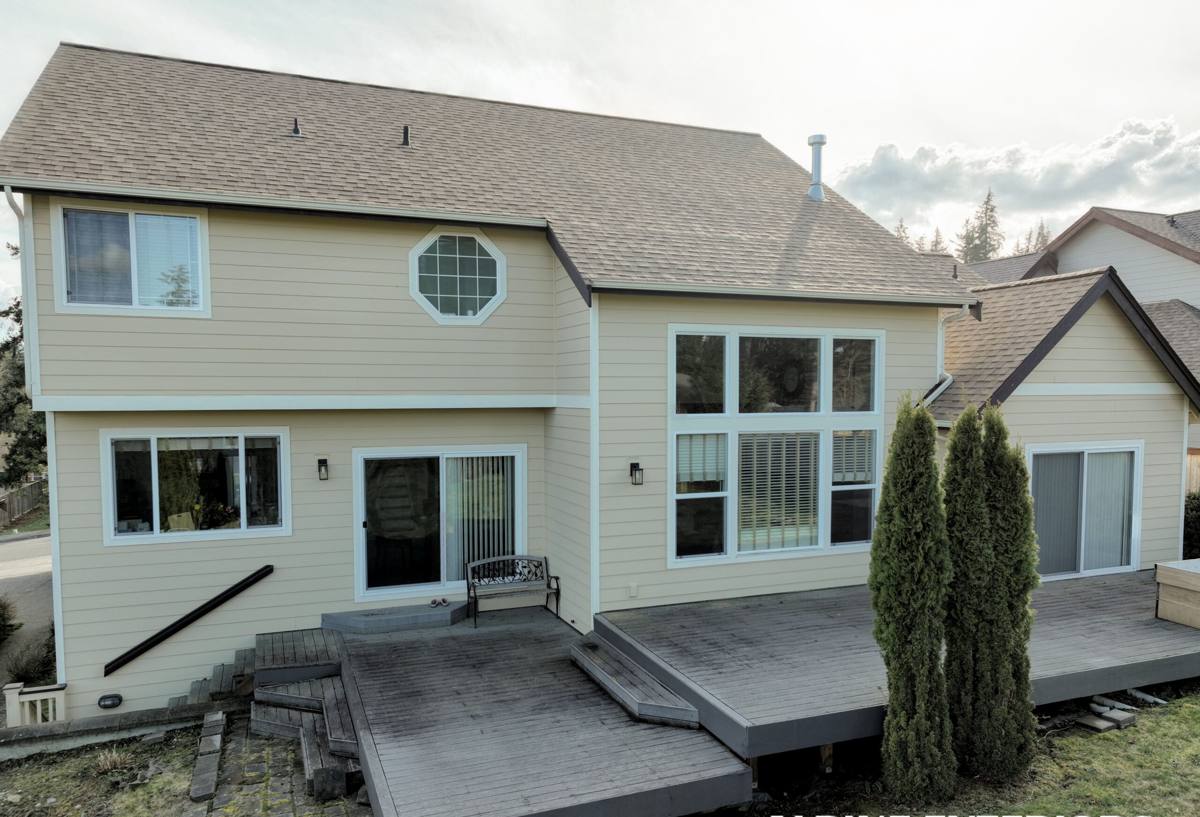
Signs a Venice Deck Needs Replacement, Not Another Repair
Repair makes sense when the problem is isolated — a few damaged boards, a loose rail section, surface graying that needs refinishing. Replacement becomes the honest recommendation once the damage has moved from the surface into the structure, or once repair costs start approaching what a new deck would run. Some signs we look for on Venice inspections:
- Soft, spongy, or springy decking underfoot in multiple areas, not just one board
- Visible rot or discoloration where the deck ledger meets the house
- Rusted, corroded, or missing fasteners and joist hangers — common near the coast due to salt exposure
- Posts or footings that have shifted, settled, or show cracking at grade level
- Railings that flex or feel loose when leaned on — a code and safety issue, not cosmetic
- Multiple past repairs that haven't stopped the same problem from returning
If two or more of these show up during an inspection, we'll say so plainly and explain why a rebuild is the more honest answer than another patch.
What a Correct Deck Replacement Actually Involves
Structure First, Boards Second
The visible decking is the last thing installed, not the first thing designed around. A correct replacement starts with the substructure: footings sized and set to local frost-free depth and soil conditions, posts rated for the deck's height and span, and joists spaced to the load the deck will actually see. In a hurricane-exposed county like Sarasota, that also means specifying hardware and fastening patterns that meet current wind uplift requirements — not just what held the old deck together, which may predate the codes currently in force.
The Ledger Connection
Most deck failures that make the news start at the ledger board — the piece that bolts the deck to the house. It has to be properly flashed to keep water from wicking into the house framing, lag-bolted or through-bolted (not just nailed) into solid framing, and detailed so that wind-driven rain, common in this area during storm season, can't work its way behind the flashing over time. This is the single spot on a deck project where cutting corners causes the most expensive problems later, and it's the spot most likely to be rushed on a budget job.
Fasteners and Hardware
Salt air corrodes standard fasteners faster than most homeowners expect. A correct build for this area uses stainless steel or coated fasteners rated for coastal/salt exposure, along with corrosion-resistant joist hangers and post bases. Using standard galvanized hardware to save a few dollars on materials is a common shortcut that shows up as rust stains and failing connections within a few years on a coastal property.
Decking Material Options for Venice's Climate
There's no single "best" decking material — there's a best fit for the homeowner's budget, maintenance appetite, and how much direct sun and salt exposure the deck actually gets. Here's how the common options compare for a property in this climate:
| Material | UV / Fade Resistance | Moisture Behavior | Maintenance | Typical Lifespan Here |
|---|---|---|---|---|
| Pressure-treated wood | Fades and grays without upkeep | Absorbs water; prone to cupping/splitting | Sealing every 1-2 years | 10-15 years |
| Composite decking | Good, varies by brand/color | Low absorption; some early products trapped moisture | Occasional cleaning, no sealing | 20-25+ years |
| PVC/capped decking | Very good | Essentially non-absorbent | Cleaning only | 25-30+ years |
| Tropical hardwoods | Fades without oiling | Naturally dense and rot-resistant | Regular oiling to maintain color | 20-25 years with upkeep |
Composite and PVC decking have become the more common choice for coastal Sarasota County homes because they hold up to sun and moisture with far less ongoing labor from the homeowner. We still install pressure-treated wood when a homeowner wants that look or budget, but we're upfront that it needs real, consistent maintenance to get anywhere near its rated lifespan out here — skipping the sealing schedule is the most common reason wood decks fail early in this climate.
Railings, Fasteners, and the Details That Fail First
Decking boards get most of the attention, but railings, stairs, and fastener choices are usually where a deck shows its age first. Aluminum and composite railing systems hold up well against salt air compared to untreated wood or standard steel. Stair stringers, being closer to grade and more exposed to splashback and standing water, deserve the same attention to hardware and moisture detailing as the ledger connection. We spec these components with the same coastal-duty standard as the rest of the build, not as an afterthought once the decking is down.
Permits, Codes, and Wind Load in Sarasota County
Deck replacement in Sarasota County isn't a weekend project you can do off the radar — permitting exists because a deck that isn't built to current wind and structural load requirements is a real risk during storm season. As part of a proper replacement, we handle the permitting and make sure the design meets the wind uplift and structural connection requirements that apply here, not the lighter standards a deck built decades ago might have been under. This protects the homeowner two ways: it keeps the structure safer in a storm, and it avoids problems at resale, when an unpermitted deck can hold up a closing or an insurance claim.
Our Process, Start to Finish
- Inspection and honest assessment — we look at the structure, not just the surface, and tell the homeowner plainly whether repair or replacement is the right call.
- Design and material selection — sized to the home, the intended use, and the homeowner's budget and maintenance preference.
- Permitting — we handle the Sarasota County permit process so the finished deck is built to current code, not just to what was there before.
- Demolition and removal — old decking, framing, and hardware removed, with any hidden rot or damage to the house structure flagged before we build over it.
- Structural rebuild — footings, framing, ledger connection, and hardware installed to coastal-duty standards.
- Decking, railing, and finish work — installed to manufacturer spec so warranties stay valid.
- Final walkthrough — we go over the finished deck with the homeowner and explain any maintenance the chosen material needs going forward.
What Deck Replacement Typically Costs
Exact pricing depends on deck size, framing condition, material choice, and railing/stair complexity, so we don't quote a number without seeing the site. In general terms, pressure-treated wood replacement sits at the lower end of the cost range, composite in the middle, and PVC/capped boards and premium railing systems at the higher end. The factors that move the price most are:
- Total square footage and number of levels or stair sections
- Condition of the existing footings and framing — reusable structure versus full rebuild
- Decking material selected (wood, composite, or PVC)
- Railing style and material
- Access to the site for material delivery and equipment
- Permit and inspection requirements for the scope of work
We walk through these factors with the homeowner during the estimate so there are no surprises once the project starts.
Why a Crew That Already Works Venice Matters
A deck replacement done by a crew unfamiliar with this specific stretch of Sarasota County tends to make the same mistakes: standard hardware instead of coastal-rated fasteners, framing detailed for a milder climate, and permitting handled generically instead of against the county's actual wind and structural requirements. A crew that regularly works Venice and the surrounding Sarasota County area already knows the local permitting process, has a track record with the inspectors, and builds to the coastal-duty standard by default rather than as an upcharge. That familiarity shows up less in the sales pitch and more in the parts of the job a homeowner never sees — the ledger flashing, the fastener grade, the footing depth — which is exactly where a deck built for this climate earns its lifespan.
Caring for a New Deck After Installation
Even a well-built, correctly-fastened deck benefits from a little seasonal attention in this climate. Rinsing off salt residue and debris periodically, keeping gutters and downspouts clear so water isn't dumping onto or near the deck, and checking railings and stair connections once or twice a year go a long way toward getting full value out of the materials chosen. Composite and PVC decking need far less of this than wood, but no material in a Gulf Coast climate is truly maintenance-free.
If your Venice deck is showing its age — soft spots, rust stains, a railing that's started to flex — we're happy to take a look and give a straight answer on repair versus replacement. Reach out for a free, no-pressure estimate using the form below.