 Sarasota Siding
 Why Venice Homes Need Siding Installed With the Coast in Mind
Venice sits on the Gulf, which means the siding on a Venice home is doing a different job than siding two hours inland. It's absorbing salt-laden air year-round, taking direct wind-driven rain during summer storms, and sitting under some of the most intense, sustained UV exposure in the country. Add the real possibility of hurricane-force wind gusts, and you have a wall assembly that has to perform, not just look good on install day.
A lot of siding failures we get called out to inspect in this part of Sarasota County aren't failures of the material itself — they're failures of installation choices that didn't account for these conditions. Gaps at trim, wrong fastener spacing, caulk used where flashing should have been, panels hung too tight to the sheathing. None of that shows up as a problem in year one. It shows up in year four or five, usually after the siding has been through a few real storms.
This page is about one thing specifically: what it takes to install siding correctly on a Venice home, and why we only do that job with James Hardie fiber cement.
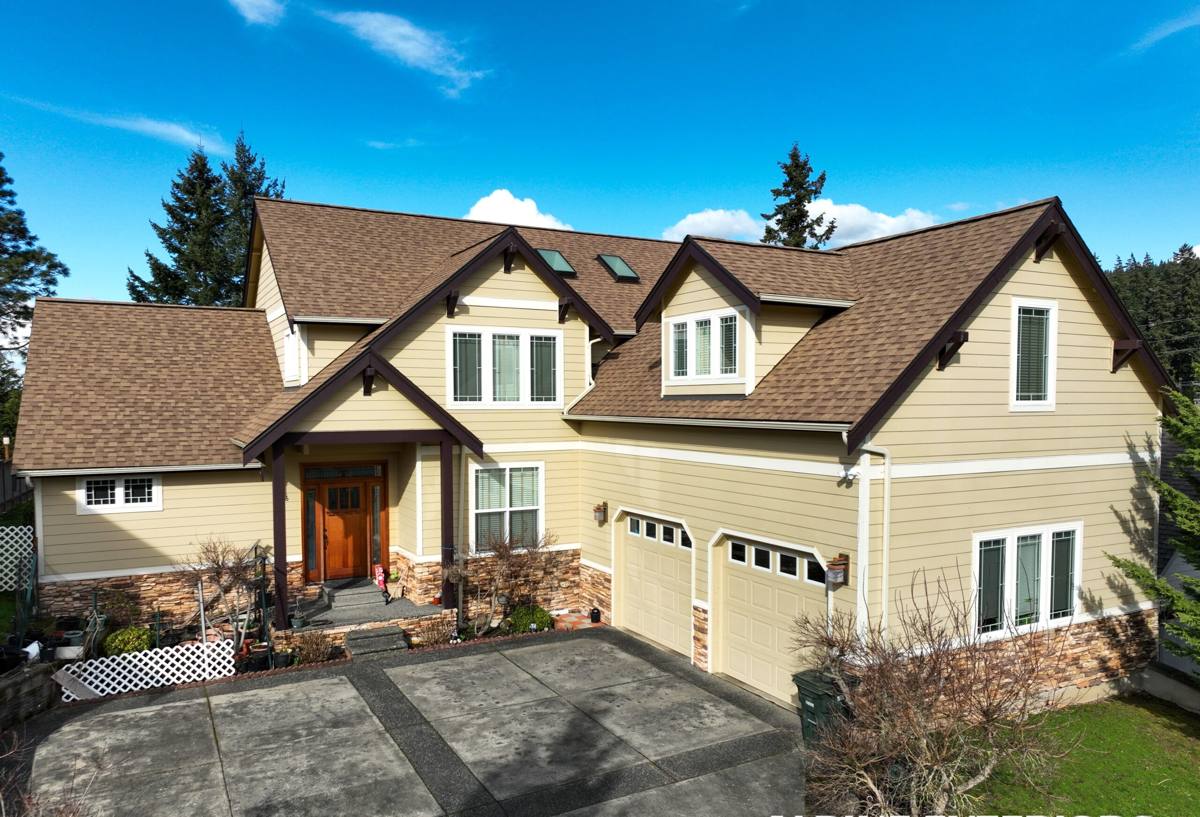
What Venice's Climate Actually Does to a Wall Assembly
Salt Air
Proximity to the Gulf means airborne salt settles on every exterior surface, including siding. Salt is corrosive to fasteners and hardware, and it accelerates the breakdown of coatings that aren't built to resist it. Over time, unprotected or poorly finished siding in salt-exposed areas can chalk, fade unevenly, or show corrosion bleed at fastener points.
Wind-Driven Rain
Florida storms rarely deliver rain straight down. Gulf-fed systems push rain sideways, driving water into any gap, seam, or penetration in the siding envelope — around windows, at corners, behind trim, at the base of walls. Siding that isn't lapped, flashed, and sealed correctly at these transition points will let water behind the cladding, where it can sit against sheathing and framing.
Year-Round UV
Venice gets strong, direct sun essentially every month of the year. UV breaks down pigments and surface coatings over time. Siding finished with a thin field-applied paint job will show fade and chalking noticeably faster here than the same product would in a milder climate.
Hurricane-Force Wind
Wind load on siding isn't just about the storm's peak gust — it's about how the panels are fastened and how the whole system resists uplift and lateral pressure over repeated events. Under-fastened or improperly nailed siding can work loose gradually, one storm at a time, long before it fails outright.
Why We Install Only James Hardie Fiber Cement
We don't install vinyl, LP SmartSide, primed wood, cedar, or other fiber cement brands. That's a deliberate standard, not a lack of options. Here's the reasoning specific to a Venice, Sarasota County property:
- Non-combustible material — fiber cement doesn't contribute fuel to a fire the way wood-based products can.
- Moisture-stable core — Hardie's fiber cement doesn't swell, delaminate, or absorb water the way engineered wood siding can when repeatedly exposed to wind-driven rain and humidity.
- Factory-applied ColorPlus finish — baked-on in a controlled setting, backed by its own warranty, and formulated to resist fade under sustained UV better than a field-applied paint job.
- HZ5 product engineering — Hardie's HZ5 line is formulated specifically for high-humidity, storm-prone climates like Florida's, which matters more here than in most parts of the country.
- Track record at scale — Hardie has decades of installed product in coastal and hurricane-exposed markets, which is exactly the environment Venice sits in.
Vinyl can deform and pull loose under sustained high wind, and it offers no fire resistance. Untreated wood and some engineered wood products are more vulnerable to moisture intrusion in a climate this humid. We're not saying every alternative product is unusable everywhere — we're saying that for Venice's specific combination of salt, sun, and storm exposure, Hardie fiber cement is the product we're willing to put our name behind.
What a Correct Installation Actually Involves
The product is only half the equation. Installation quality is what determines whether that product performs for 30+ years or needs attention in year six. On every Venice project, that means:
Weather-Resistive Barrier and Flashing First
Before a single piece of siding goes up, the wall needs a properly lapped weather-resistive barrier and correct flashing at every window, door, and penetration. This is the layer that actually stops wind-driven rain from reaching the sheathing — the siding is the second line of defense, not the first.
Correct Fastening for Wind Zone
Fastener type, spacing, and placement have to match the wind exposure the home actually faces, following Hardie's published fastening schedules for the applicable wind zone — not a generic spacing pattern used everywhere regardless of location.
Proper Clearances and Gaps
Siding needs the manufacturer-specified gap from roofing, decks, and grade, and correct clearance at butt joints and corners to allow for expansion without trapping moisture.
Caulking Only Where It Belongs
Caulk is a maintenance item, not a substitute for flashing. We use it where Hardie's install specs call for it and rely on proper flashing and lapping everywhere else — because caulk that fails in coastal UV exposure shouldn't be the only thing keeping water out.
Trim and Corner Detail
Corners, trim boards, and transitions are where the majority of water intrusion problems start. These details take more time to do correctly than the flat field of siding does, and it's usually where installation quality separates itself.
Our Process on a Venice Project
- On-site assessment — we look at the existing siding or sheathing condition, wind exposure of the specific lot, and any problem areas (window returns, corners, low-clearance zones).
- Product and color selection — walking through Hardie's HZ5 lines, panel and plank profiles, and ColorPlus options suited to the home and any HOA or neighborhood guidelines.
- Tear-off and substrate check — removing existing siding (where applicable) and inspecting sheathing for hidden moisture damage before anything new goes up.
- Weather barrier and flashing installation — the unglamorous layer that does the real water-stopping work.
- Hardie installation to spec — fastening schedule, clearances, and trim detail matched to the wind zone and this coastal environment.
- Final walkthrough — checking caulking, trim lines, and clearances before we call the job done.
Cost Factors for Siding Installation in Venice
Every home is different, but the same set of variables tends to drive cost on Venice projects specifically:
| Factor | Why It Matters Here |
|---|---|
| Home size and wall complexity | More corners, dormers, and trim detail means more labor at the transitions that matter most for water resistance. |
| Existing siding removal | Tear-off and disposal of old material, plus any sheathing repair found underneath. |
| Panel vs. lap profile | Different Hardie profiles carry different material and labor costs. |
| ColorPlus vs. primed for field paint | Factory finish costs more up front but holds up better against this area's UV exposure. |
| Wind zone fastening requirements | Higher wind exposure can mean tighter fastener spacing and additional labor time. |
| Access and site conditions | Lot layout, landscaping, and building height affect scaffolding and staging needs. |
Signs Venice Homeowners Should Watch For
- Visible gaps, cracking, or separation at siding seams and corners
- Soft spots or discoloration at the base of exterior walls
- Paint or finish that's fading unevenly, especially on sun-exposed elevations
- Rust streaking near fastener points
- Siding that flexes or feels loose when pressed near the bottom edge
- Visible warping or buckling after a storm season
Any of these are worth a professional look before they turn into a sheathing or framing problem.
Why Local Installation Experience Matters
A crew that installs siding across a range of climates knows the general rules. A crew that works Venice and the surrounding Sarasota County coastline regularly knows which corners of a house take the worst wind-driven rain, which elevations fade fastest under this specific sun angle, and which fastening approach actually holds up through a real hurricane season here — not just on paper. That local pattern recognition is what keeps small installation choices from turning into callbacks a few years down the road.
Get a Straight Answer for Your Home
If you're planning new siding or replacing what's on your Venice home now, we're happy to take a look and give you a straightforward assessment — what condition your walls are in, what Hardie product line fits the house, and what correct installation looks like for your specific exposure. Reach out for a free, no-pressure estimate using the form below.