 Sarasota Siding
 Asphalt Shingle Roofing Built for Nokomis Conditions
Nokomis sits close enough to the Gulf that salt air, humidity, and wind are part of daily life, but far enough inland that homeowners sometimes assume their roof doesn't need the same attention as a beachfront property. That assumption costs money. A roof in Nokomis deals with the same hurricane-season wind loads, the same relentless UV exposure, and much of the same wind-driven rain as anywhere else in Sarasota County. Asphalt shingle roofing remains one of the most practical, cost-effective options for this area when it's specified and installed correctly — but "correctly" is doing a lot of work in that sentence, and it's where a lot of roofs in this area fall short.
This page covers what an asphalt shingle roof needs to hold up on a Nokomis home, what a proper installation actually involves, and how our process works from first look to final inspection.
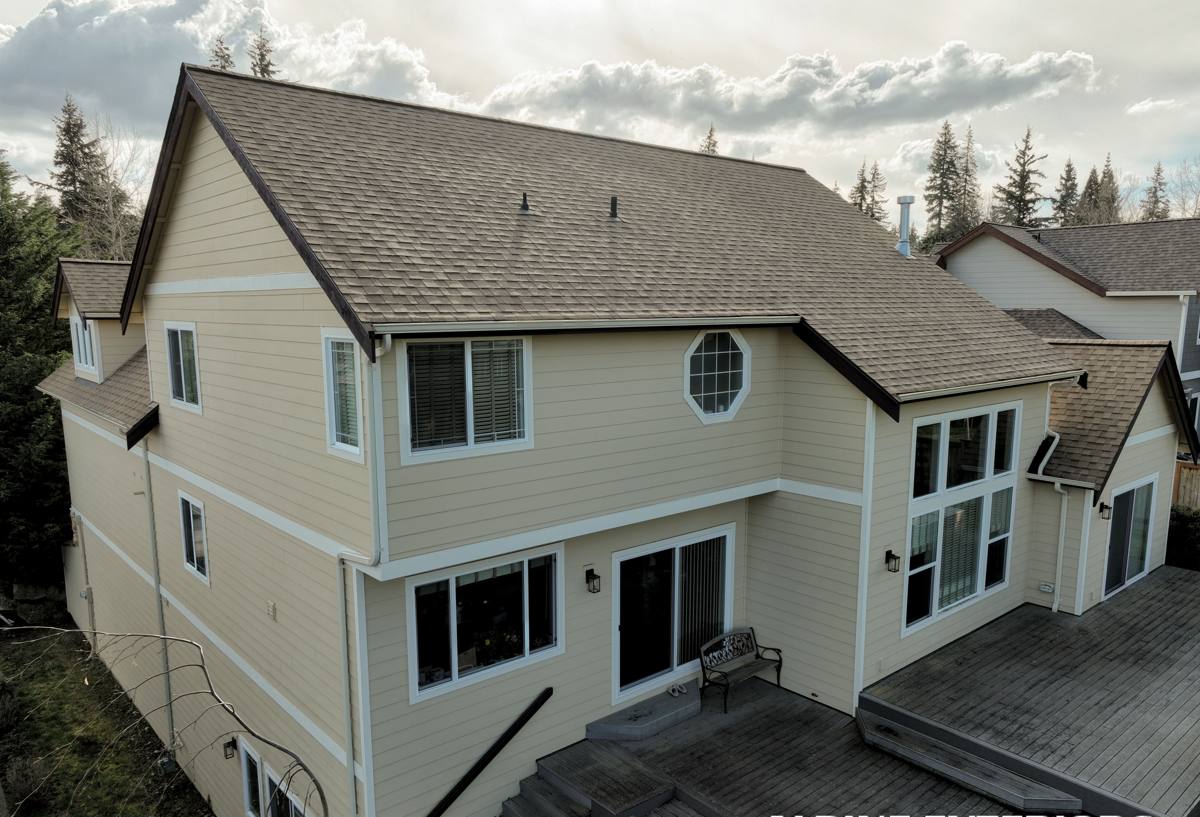
Why Nokomis's Climate Is Hard on Roofs
Sarasota County roofs age faster than roofs in most of the country, and it isn't one single factor — it's several stacking on top of each other year after year.
Wind
Nokomis is squarely in a hurricane-exposed part of Florida. Even outside a named storm, this area gets frequent thunderstorm gusts strong enough to lift poorly fastened shingles. Wind doesn't just tear shingles off in a big dramatic event — it works on weak points gradually, loosening tabs and sealant strips a little more with every storm until a failure finally shows up.
UV Exposure
Year-round sun in this part of Florida breaks down the asphalt in shingles faster than in northern climates. UV degrades the oils in the asphalt mat, making shingles more brittle over time. A shingle rated for 25-30 years up north commonly performs on a shorter timeline here, purely because of sun load.
Wind-Driven Rain
It's not just how hard it rains — it's the angle. Wind-driven rain gets pushed sideways and upward under shingle edges, at ridge caps, and around any roof penetration (vents, chimneys, skylights). A roof that would shed a straight-down rain just fine can leak badly under wind-driven rain if flashing and underlayment weren't installed with that in mind.
Salt Air
Nokomis's proximity to the coast means salt-laden air moves through regularly. Salt accelerates corrosion on exposed metal — fasteners, flashing, vent stacks, drip edge — which is why fastener and flashing material selection matters more here than it would further inland.
None of these factors alone is unusual for Florida. Together, on a coastal-adjacent property like a Nokomis home, they add up to a roof that needs to be installed with more margin for error than a textbook installation guide assumes.
What a Correct Asphalt Shingle Job Actually Involves
Asphalt shingle roofing has a reputation as a simple, commodity product, and the shingles themselves are widely available. What separates a roof that holds up in this climate from one that doesn't isn't usually the shingle brand — it's everything underneath and around it.
Deck Inspection and Repair
Before anything goes down, the roof deck needs to be sound. Soft, delaminated, or water-damaged decking has to be identified and replaced, not covered over. Fastening shingles to a compromised deck is one of the most common reasons a "new" roof underperforms.
Underlayment
In a wind and rain climate like this one, underlayment is not a formality — it's the roof's real waterproof barrier if wind ever drives water past the shingles. Synthetic underlayment paired with self-adhering (peel-and-stick) membrane at vulnerable areas — eaves, valleys, and around penetrations — gives the roof a second line of defense that a single layer of standard felt doesn't.
Flashing
Flashing at chimneys, walls, skylights, and any roof-to-wall transition is one of the most common leak points on any roof, and it's frequently done poorly on lower-cost installations. Correct flashing means properly lapped, corrosion-resistant metal integrated with the underlayment and shingles — not just sealant smeared over a gap.
Fastening for Wind Resistance
Nail pattern, nail placement, and nail count directly determine how much wind a shingle roof can take before it fails. Florida Building Code sets minimum fastening requirements for this region, and in a wind-exposed area like Nokomis, following the shingle manufacturer's high-wind fastening pattern (not just the bare minimum) is the difference between a roof that survives a bad storm season and one that doesn't.
Ventilation
Proper attic ventilation keeps heat and moisture from building up under the roof deck. In Florida's heat and humidity, poor ventilation shortens shingle life from underneath, even if the top side looks fine.
Choosing the Right Shingle for a Coastal-Adjacent Property
Not every asphalt shingle product is a good fit for Nokomis. We generally steer homeowners toward shingles with a wind rating that matches or exceeds what this area actually experiences, and toward algae-resistant granules given the area's humidity, which otherwise leads to dark streaking over time. Architectural (dimensional) shingles tend to perform better than older three-tab styles in wind testing, and most manufacturer high-wind warranties are tied to using their full rated system — matching underlayment, starter strip, and hip/ridge cap — not just the field shingle.
| Factor | Standard 3-Tab Shingle | Architectural/Dimensional Shingle |
|---|---|---|
| Typical wind rating | Lower end of rated range | Higher wind ratings available |
| Appearance | Flat, uniform | Dimensional, heavier look |
| Relative material cost | Lower | Moderate |
| Typical warranty length | Shorter | Longer |
| Fit for coastal wind exposure | Acceptable with proper install | Generally better suited |
These are general trends, not guarantees — the installation quality matters as much as the product tier. A premium shingle installed with weak fastening or poor flashing will still underperform a mid-tier shingle installed correctly.
Signs a Nokomis Roof Needs Attention
Because this climate ages roofs faster, it's worth knowing what to watch for between inspections:
- Shingles that look cupped, curled, or have lost noticeable granules
- Bald or shiny patches where the granule coating has worn away
- Missing shingles or tabs after a storm, even a minor one
- Dark streaking (typically algae growth) across the roof surface
- Soft spots or sagging when walked, or visible sagging from the ground
- Water stains on interior ceilings, especially after wind-driven rain
- Cracked or lifted flashing around chimneys, vents, or skylights
- Granules collecting in gutters, a sign the shingle surface is breaking down
Catching these early usually means a repair. Ignoring them usually means a full replacement sooner than the shingle's rated lifespan would suggest.
Repair vs. Replacement
Not every issue means starting over. We evaluate the roof's age, the extent of damage, and the condition of the decking and underlayment before recommending either path.
| Consideration | Repair Usually Makes Sense | Replacement Usually Makes Sense |
|---|---|---|
| Age of roof | Well within expected lifespan | At or beyond expected lifespan |
| Damage extent | Isolated to a small area | Widespread or recurring in multiple areas |
| Deck condition | Sound, no rot found | Soft spots or water damage present |
| Storm history | Single, recent event | Cumulative wear across multiple seasons |
| Underlayment condition | Intact, still doing its job | Degraded or failing in multiple spots |
Our Process for Nokomis Homeowners
We keep the process straightforward and put the emphasis on the parts most roofing companies rush through.
1. On-Site Inspection
We walk the roof and check the deck, flashing, ventilation, and current shingle condition, not just what's visible from the ground.
2. Straightforward Assessment
We explain what we found in plain terms — what needs to happen now, what can wait, and why — before any work is scheduled.
3. Correct Prep Work
Any deck repair happens before underlayment goes down. We don't install a new roof system over a deck that isn't sound.
4. Full System Installation
Underlayment, flashing, starter strip, field shingles, and ridge cap are installed as a matched system, fastened to the pattern the wind exposure in this area calls for.
5. Final Walkthrough
We review the completed work with the homeowner and make sure everything — including cleanup — is done before we consider the job finished.
Why Local Experience in Nokomis and Sarasota County Matters
A roofing crew that regularly works in Nokomis and the broader Sarasota County area already understands the wind exposure, the humidity, and the salt air this coastline deals with, without having to learn it on a homeowner's roof. That familiarity shows up in decisions that aren't always visible after the job is done — fastener choice, underlayment layup at valleys, how flashing is detailed around penetrations. It also means we're realistic about timelines during hurricane season, when demand for roofing work spikes and material availability can shift quickly. We'd rather set honest expectations than overpromise a schedule we can't hit.
Maintaining an Asphalt Shingle Roof in This Climate
A well-installed shingle roof still benefits from basic upkeep in a climate like this one:
- Have the roof inspected after any major storm, not just on a fixed annual schedule
- Keep gutters and downspouts clear so water moves off the roof instead of backing up under shingles
- Trim overhanging branches that drop debris or create abrasion points
- Address small issues — a lifted shingle, a small flashing gap — before the next storm season
- Keep attic ventilation clear so heat and moisture don't build up under the deck
None of this replaces a correct installation, but it extends the life of one.
Getting Started
If you're dealing with storm damage, an aging roof, or just want an honest read on where your roof stands, we're glad to take a look. We offer free, no-pressure estimates for Nokomis homeowners — use the form below to get started.