 Sarasota Siding
 Bradenton's Climate Is Hard on Windows
Bradenton sits close enough to the Gulf and to Sarasota Bay that its homes take the same weather beating as the rest of the region: hurricane-force winds during storm season, wind-driven rain that finds every weak seal, salt-laden air that corrodes hardware and pits metal, and UV exposure that runs nearly year-round rather than seasonal like it does farther north. Windows are one of the first things to show that wear. A window that was fine when a house was built ten or fifteen years ago is often the weak point in the building envelope today — letting in heat, losing cooled air, fogging between panes, or simply failing to perform the way it should when a storm rolls through.
Energy-efficient windows done right for this part of Sarasota County aren't just about a lower electric bill, though that's real. They're about a window system that holds up to wind load, sheds water instead of letting it in around the frame, and keeps doing its job after a few years of salt air and sun. Those are different problems than a window contractor in a drier, cooler climate has to solve, and they change what "correct installation" actually means here.
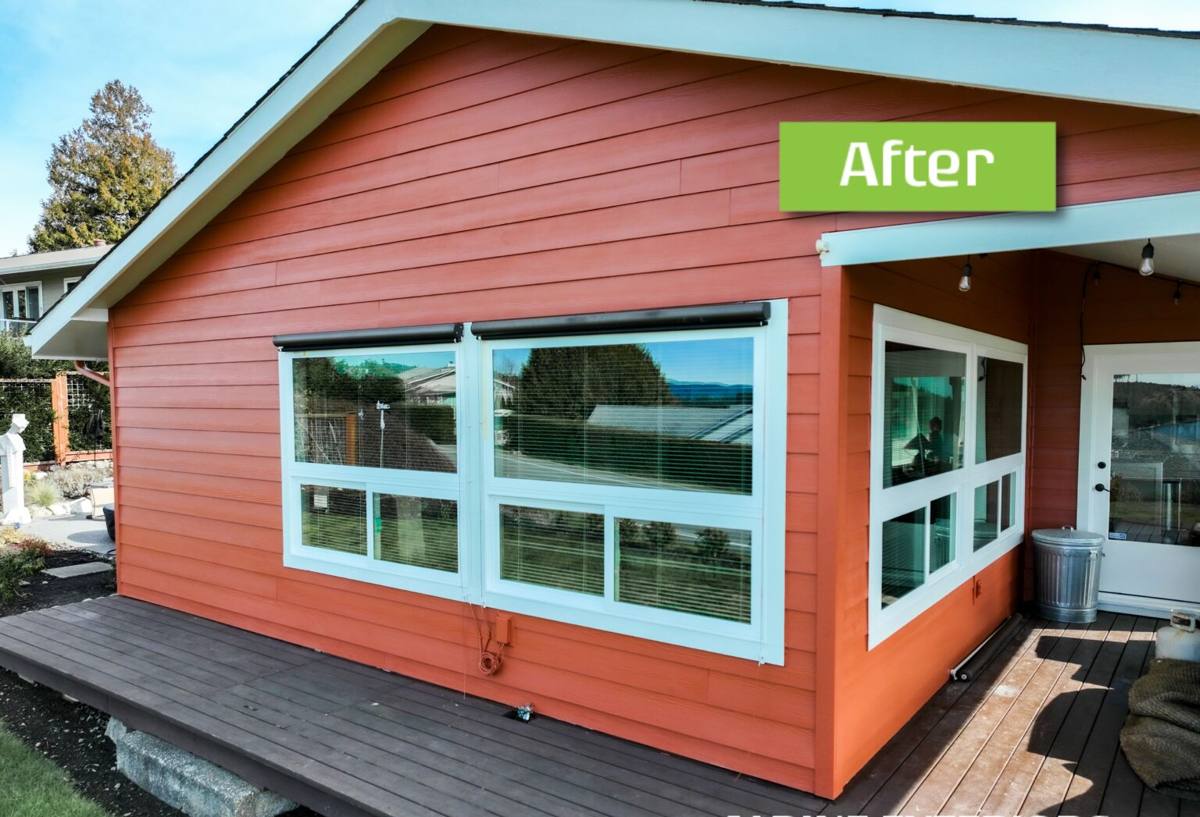
What Makes a Window "Energy-Efficient" in This Climate
Energy efficiency in a coastal Florida window comes down to three things working together: the glass package, the frame material, and how well the unit is sealed and flashed into the wall. Get one wrong and the other two can't fully compensate.
Low-E Glass and Solar Heat Gain
Low-emissivity (Low-E) coatings and gas-filled insulated glass units reduce how much solar heat passes through the glass, which matters more here than in most of the country because Bradenton homes run air conditioning nearly every month of the year. The relevant numbers are U-factor (how much heat transfers through the whole window) and SHGC, or solar heat gain coefficient (how much solar radiation passes through). For this climate, a lower SHGC generally matters more than chasing the lowest possible U-factor, since the bigger cost driver locally is heat gain, not heat loss.
Frame Material and Thermal Performance
Frame material affects both energy performance and how the window holds up physically. Metal conducts heat and cold far more readily than vinyl or fiberglass, and it also reacts differently to salt exposure. We'll walk through the tradeoffs by material below.
Impact Rating Isn't Optional Near the Coast
An energy-efficient window that isn't also rated for wind-borne debris is a liability in this market. Impact-rated laminated glass and reinforced frames do double duty: they meet code for storm protection, and the same tight, engineered seal that keeps wind-driven rain out during a hurricane also keeps conditioned air in on an ordinary July afternoon. In our experience, a window that's genuinely impact-rated and properly installed almost always outperforms a code-minimum window paired with separate shutters, because the shutters only help during a storm — the window itself is working every single day.
Frame Material Comparison for Bradenton Homes
There's no single "best" frame material for every house. The right choice depends on the home's age, whether it's on a slab or has masonry openings, and the owner's tolerance for maintenance. Here's how the common options compare for this specific climate.
| Frame Material | Energy Performance | Salt Air / Corrosion Resistance | Maintenance | Relative Cost |
|---|---|---|---|---|
| Vinyl | Strong; low thermal conductivity | Very good; won't corrode | Low; no painting or sealing | Lower to mid |
| Aluminum | Weaker unless thermally broken | Fair; needs quality coating to resist salt pitting | Moderate; hardware and finish need attention | Mid |
| Fiberglass | Strong; stable across temperature swings | Excellent | Low | Higher |
| Wood-clad | Strong when intact | Poor without diligent upkeep; cladding can trap moisture | High | Higher |
Aluminum is still common on older Florida homes because it was the standard for decades and it handles large openings well, but on a house sitting within a few miles of saltwater, an aluminum frame needs a genuinely good factory finish or it will start showing white corrosion at the corners and around hardware within a handful of years. Wood-clad frames look good and perform well thermally, but the cladding can hide moisture problems developing underneath, which is a bad combination with the humidity and rain patterns here. For most Bradenton-area replacements, we steer homeowners toward vinyl or fiberglass unless there's a specific reason — historic character, an HOA requirement, an architectural match — to go another direction.
Meeting Manatee and Sarasota County Wind Codes
Window replacement in this part of the state isn't just a product decision, it's a code compliance job. Depending on the specific location and the home's exposure category, windows need to carry a design pressure rating adequate for the site and, in many cases, a Florida Product Approval or Miami-Dade Notice of Acceptance (NOA) documenting that the exact window and glass assembly has been tested for wind-borne debris impact. The permitting office wants to see that paperwork match the product actually installed, not just a general "impact glass" claim.
This is also where a lot of do-it-yourself and out-of-town installs go wrong: the window itself may be rated correctly, but if the installation instructions from the manufacturer's approval aren't followed — fastener spacing, anchor type, shim placement, sealant compatibility — the installed assembly no longer matches what was tested, and the whole point of the rating is lost. We pull permits, follow the manufacturer's approved installation detail for the specific product and wall type, and leave the paperwork with the homeowner in case it's ever needed for insurance or resale.
How We Approach a Bradenton Window Replacement
The process is straightforward, but the details matter more here than they do in a milder climate.
- On-site assessment. We look at existing window condition, framing type (masonry vs. wood-frame), current signs of water intrusion, and sun exposure by elevation, since west- and south-facing rooms often benefit from a different glass spec than north-facing ones.
- Product selection and design pressure matching. We match window size, frame material, and glass package to the home's wind zone requirements and the owner's priorities — energy performance, noise reduction, budget, or all three.
- Precise measurement. Openings on older homes are rarely perfectly square. We measure each opening individually rather than assuming uniform sizing.
- Permitting. We handle the permit application and inspection scheduling so the finished job is documented and code-compliant.
- Removal and prep. Old units come out carefully to protect surrounding stucco, siding, or interior trim, and we check the rough opening for any hidden rot or water damage before the new window goes in.
- Installation and flashing. This is the step that determines whether the window actually keeps water out. Proper flashing integration with the wall's water management layer matters as much as the window itself.
- Sealing and finish work. Sealant selection and application around the frame perimeter, plus interior and exterior trim work to match the home.
- Final inspection and walkthrough. We confirm operation, sealing, and appearance with the homeowner before calling the job done.
Signs Your Current Windows Are Working Against You
Homeowners often live with underperforming windows longer than necessary because the problems show up gradually. Worth checking for:
- Rooms near windows feel noticeably hotter or colder than the rest of the house
- Fogging or a permanent haze between panes of double-pane glass (a sign the seal has failed)
- Visible corrosion, pitting, or chalky white residue on aluminum frames or hardware
- Difficulty opening, closing, or locking windows — often a sign the frame has warped slightly
- Drafts or a whistling sound during windy conditions
- Water staining on interior sills or drywall below windows after heavy rain
- Rising cooling bills that aren't explained by rate increases alone
- Windows that predate the home's most recent wind-code cycle, especially on homes built before stricter impact standards were adopted
What Drives the Cost of Energy-Efficient Windows
Costs vary by opening size, glass package, and frame material, but a few factors consistently move the price more than homeowners expect.
| Cost Factor | Why It Matters |
|---|---|
| Impact-rated glass vs. standard insulated glass | Laminated impact glass costs more per unit but often removes the need for separate shutters or panels |
| Frame material | Vinyl is generally the most budget-friendly; fiberglass and wood-clad cost more upfront |
| Opening size and configuration | Large sliders, picture windows, or custom shapes cost more than standard operable sizes |
| Wall type | Masonry openings and stucco finishing require different labor than wood-frame construction |
| Number of openings replaced at once | Doing a full-house replacement in one project is typically more cost-effective per window than replacing a few at a time |
| Existing damage | Rot or water damage found in the rough opening during removal adds repair scope |
We give straightforward, itemized estimates so homeowners can see where the money is going and make informed tradeoffs rather than guessing.
Caring for Windows in Salt Air and Year-Round Sun
Even a well-installed, well-rated window benefits from a little upkeep in this environment. Rinsing frames and tracks periodically helps clear salt residue before it has a chance to sit and corrode hardware, especially on homes closer to the water. Checking and refreshing exterior sealant every few years, rather than waiting for a leak to show up, is far cheaper than repairing water damage after the fact. Operable hardware — locks, hinges, rollers on sliders — should be checked periodically since salt air is harder on moving metal parts than on the frame itself. None of this is complicated, but skipping it is how a good window installation starts to underperform years before it should.
Why Hire a Crew That Already Works in Bradenton
Window replacement in this area isn't generic work. A crew that regularly works in and around Bradenton and greater Sarasota County already knows the local permitting requirements, the wind zone expectations for the area, and the kinds of construction — block, wood-frame, older stucco — common to local housing stock. That familiarity shows up in fewer surprises during removal, fewer permitting delays, and installation details that account for how this specific coastline treats a window over time rather than applying a one-size-fits-all approach borrowed from a different climate. It also means someone is genuinely reachable afterward if a question comes up, rather than a crew that installed windows here once and moved on.
If you're weighing whether it's time to replace windows in your Bradenton home, we're happy to take a look and give you a straightforward assessment of what your home actually needs. Reach out for a free, no-pressure estimate using the form below.