 Sarasota Siding
 Building New in Bradenton? Your Windows Have a Job to Do From Day One
When you're building new, the windows aren't an upgrade you bolt on later — they're part of the building envelope from the moment framing goes up. In Bradenton and the surrounding Manatee and Sarasota county area, that envelope has to hold up against hurricane-force wind gusts, wind-driven rain that gets pushed sideways into wall assemblies, intense year-round UV that breaks down cheap vinyl and seals over time, and salt air drifting in off Tampa Bay and the Gulf that quietly corrodes hardware and fasteners that weren't rated for it. Windows installed correctly during new construction can handle all of that for decades. Windows installed as an afterthought, or installed fast to keep a build schedule moving, tend to show problems within a few years — leaks at the corners, fogged glass, hardware that seizes up, trim that cracks and lets water behind the wall.
This page is specifically about new-construction window installation for homes being built in Bradenton — not window replacement on an existing house, which is a different job with different techniques. If you're building, this is the stage where getting it right actually matters most, because mistakes made now get sealed behind stucco, siding, and drywall.
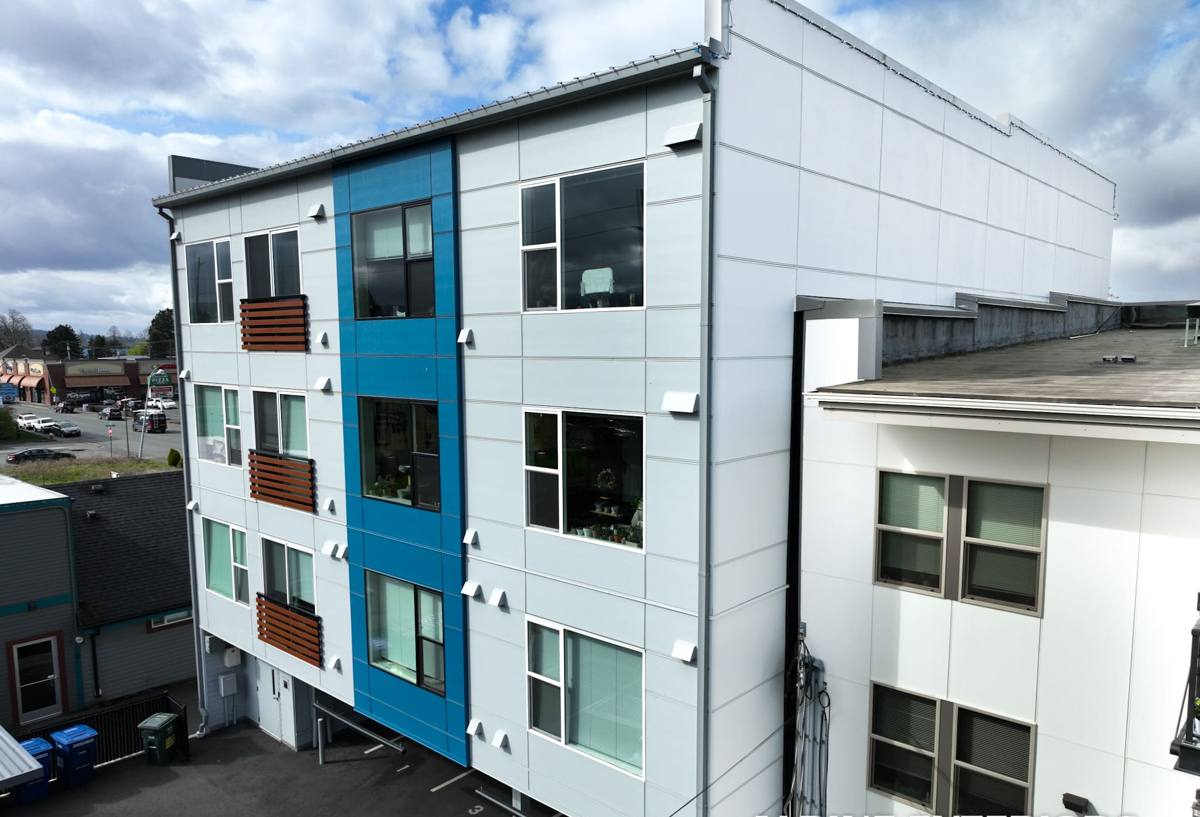
New-Construction Windows vs. Replacement Windows: Why the Method Matters
New-construction windows have a nailing fin (also called a nail flange) around the perimeter of the frame. That fin gets integrated directly into the house's weather-resistive barrier — the housewrap or building paper — before the exterior finish goes on. Done correctly, water that gets behind the siding or stucco is directed down and out, over the fin, and away from the wall structure, the same way shingles overlap on a roof. This is a fundamentally different approach than replacement window installation, where a window without a nailing fin gets set into an existing rough opening in a finished wall and sealed with trim and caulk.
The advantage of doing it right at the new-construction stage is that you get a continuous, layered water management system instead of relying on caulk alone to keep a wall dry. The trade-off is that there's no room for shortcuts — once the housewrap, flashing tape, and siding go on over a poorly installed window, the mistake is invisible until it shows up as a leak or rot years later. That's the core reason we treat new-construction window installation as a sequencing problem as much as a product installation: the window has to go in at the right point in the build, integrated correctly with everything around it, or the rest of the envelope doesn't work the way it's designed to.
What Florida Building Code Expects From New Builds Here
New construction in Manatee and Sarasota counties has to meet Florida Building Code wind load and windborne-debris requirements tied to the design wind speed for your specific lot, exposure category, and the home's height and roof geometry. In practice, that means every window on a new build needs a product approval — either a Florida Product Approval (FL number) or a Miami-Dade Notice of Acceptance (NOA) — that matches the design pressure your engineer or architect has specified for that opening. A window rated for one part of the house isn't automatically rated for every opening; corner windows, upper-floor windows, and windows on the windward side of the house often carry higher pressure requirements than a sheltered opening on the ground floor.
This is also where impact protection comes in. Depending on how your plans are written, that protection is met either with impact-rated glass built into the window itself, or with code-approved shutters or panels installed separately. Either approach can satisfy code, but they're not interchangeable on a whim — the plan set and product approvals need to agree with what actually goes in the opening, and that paperwork gets checked at inspection. We pull and verify the product approval numbers against the approved plans before a single window goes in, not after.
Choosing Frame and Glass for a Bradenton New Build
Frame material and glass package are where most of the long-term performance difference shows up. There's no single "best" choice for every home — it depends on your budget, your elevation's exposure, and how much maintenance you want to take on.
| Frame Material | How It Handles This Climate | Trade-Offs |
|---|---|---|
| Vinyl | Good UV-stabilized vinyl resists fading and holds up well; no corrosion risk from salt air | Lower-grade vinyl can warp or yellow under intense sun over time; frame strength is lower than fiberglass or aluminum |
| Aluminum | High structural strength, good for larger openings and higher wind pressures | Needs a quality finish to resist salt air corrosion; conducts heat, so thermal performance depends on the frame design |
| Fiberglass | Very stable in heat and UV, minimal expansion/contraction, strong corrosion resistance | Higher upfront cost than vinyl |
On glass, most new builds in this area use either laminated impact glass or standard insulated glass paired with code-approved shutters. Impact glass adds cost per opening but removes the step of installing and storing shutters, and it also cuts down on outside noise and UV transmission, which matters given how much direct sun this region gets. We'll walk through what your specific plan set requires and where you have real choices versus where the code and your engineer have already decided for you.
Glass Coatings and UV
A low-E coating is worth discussing regardless of which frame material you choose. Year-round Florida sun pushes a lot of solar heat gain through glass, and a good low-E coating cuts that down without noticeably darkening the glass, which helps both comfort and cooling costs over the life of the house.
How Our New-Construction Window Process Works
New-construction window installation has to fit into the builder's schedule without becoming the bottleneck, while still being done in the right order. Here's how we handle it:
- Plan and window schedule review — we confirm the window schedule matches the approved permit set, including sizes, product approval numbers, and design pressures for each opening.
- Rough opening verification — before we set anything, we check that framed openings are square, plumb, and sized correctly. Catching a framing error here is far cheaper than catching it after siding is on.
- Flashing and weather barrier integration — sill pans, flashing tape, and housewrap laps are installed in the correct sequence so water is directed out of the wall, not into it.
- Setting the window — units are set level and plumb and fastened per the manufacturer's code-approved fastening schedule, not a generic pattern.
- Sealing and insulating the perimeter — the gap between the frame and rough opening is sealed and insulated correctly, which affects both energy performance and how well the window resists wind-driven rain.
- Documentation — we keep the product approval paperwork and installation details organized for your final inspection, since Bradenton-area building departments will want to see that installed products match what was approved on the plans.
Mistakes We See on New-Construction Window Jobs
Most window failures in new construction don't come from a bad window — they come from how it was installed. The problems we get called to fix later usually trace back to a handful of recurring issues:
- Flashing installed out of sequence, so water gets trapped behind the wall instead of directed out
- Fastener spacing that doesn't match the manufacturer's tested and approved pattern, which can quietly reduce the window's actual wind resistance below what the approval assumes
- Sealant used as the only line of defense instead of proper flashing — caulk fails eventually; flashing shouldn't have to
- A window's product approval that doesn't actually match the design pressure required for that specific opening
- Rough openings that were slightly out of square, forcing the window frame to rack and stressing the seals over time
None of these show up on move-in day. They show up two, five, or ten years later, usually as a stain on drywall near a window or a frame that's harder to open than it used to be. Getting the sequence and details right the first time is cheaper than any repair.
What New-Construction Windows Cost in Bradenton
Costs vary quite a bit based on the home's design and how many openings need higher wind-pressure or impact-rated products. Rather than quote a flat number, it helps to know what actually drives the price up or down.
| Cost Factor | Why It Matters |
|---|---|
| Frame material | Vinyl is generally the most affordable; fiberglass and higher-end aluminum cost more upfront |
| Glass package | Laminated impact glass costs more per window than standard glass paired with shutters, but removes the shutter step entirely |
| Design pressure per opening | Windows on higher-exposure elevations or upper floors often need heavier-duty, higher-rated units |
| Window size and count | Large openings and window walls cost more per square foot than standard-size units |
| Trim and finish detailing | Custom interior/exterior trim work adds labor beyond the window unit itself |
We'll give you a real, itemized number once we know your plan set and window schedule — not a rough guess that changes once the order goes in.
Why a Crew That Already Builds in Bradenton Matters
New-construction window installation isn't just a product install — it's a coordination job. We're working around framers, stucco crews, and inspectors, and we're doing it against the design wind speeds and product approval requirements that apply specifically to Manatee and Sarasota county permitting. A crew that's already worked with local building departments knows what inspectors here typically check, how strict the review is on product approval documentation, and how to sequence the work so we're not the reason a build falls behind schedule. That local familiarity is the difference between a window install that sails through inspection and one that gets flagged for missing paperwork or a mismatched approval number, which can cost real time on a build schedule.
Before You Sign a New-Construction Window Contract, Ask These
- Do the quoted windows' product approval numbers match the design pressures on my approved plan set?
- Is impact glass or shutter protection specified, and does the quote match what's actually on the plans?
- What frame material and glass package am I getting, and why was it recommended for my specific elevation?
- Who handles flashing and weather barrier integration — is that included, or assumed to be someone else's scope?
- Will I get documentation for final inspection, including product approval paperwork?
- What's the timeline for delivery and installation relative to my framing and dry-in schedule?
If a contractor can't answer these clearly before you sign, that's worth noticing now rather than after the windows are set.
If you're building in Bradenton and want windows installed right the first time — correctly sequenced, correctly documented, and matched to what your plans actually require — we're glad to walk through your window schedule and give you a straightforward, no-pressure estimate using the form below.