 Sarasota Siding
 A Neighborhood in Transition Needs Siding That Can Keep Up
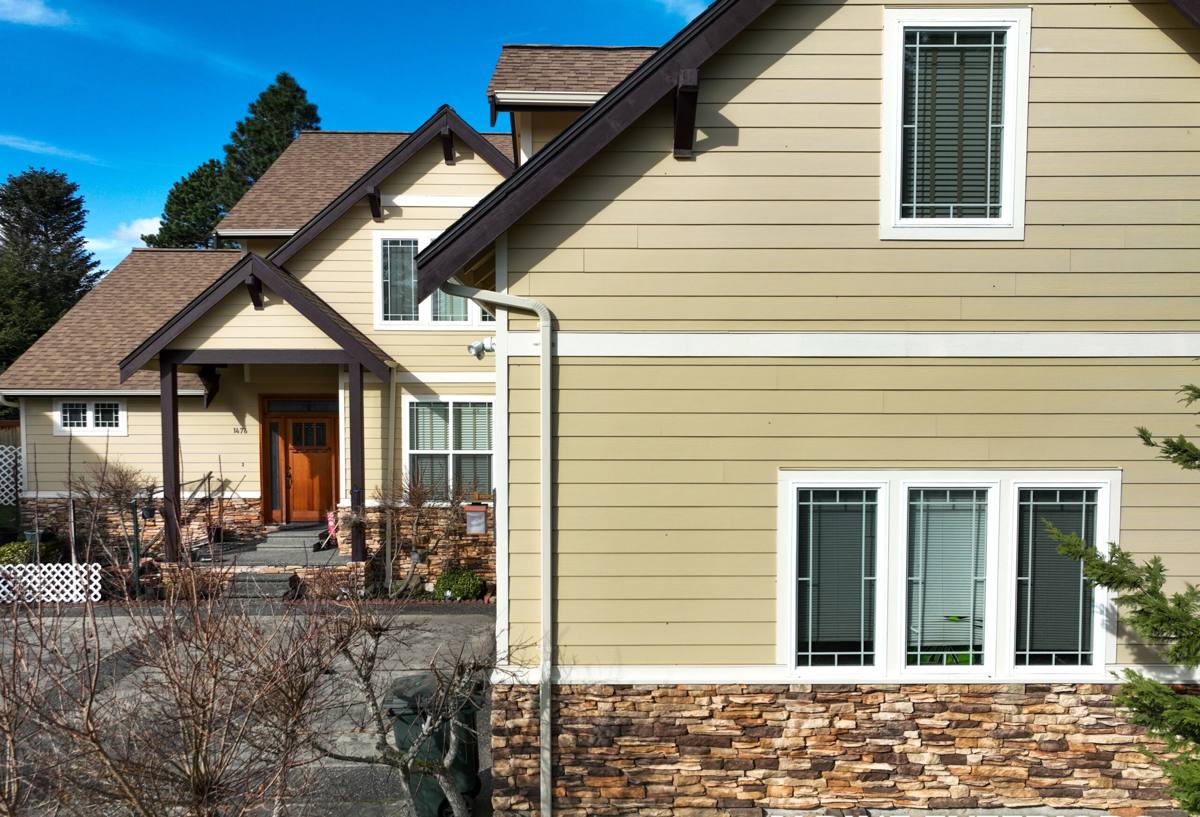
Rosemary District sits just north of downtown Sarasota, and it's one of the more visibly changing pockets of the city right now. Older bungalows and modest frame homes stand within a block or two of newer infill construction, and homeowners on both sides of that mix are asking the same question: what exterior material actually holds up here, and what does it take to install it right? We work this area specifically, not as a stop on a countywide route, and this page is about one job in one neighborhood — fiber cement siding installed correctly on a Rosemary District home.
We're not going to give you a generic rundown of siding options. This is about what Sarasota's climate does to a wall over years, why James Hardie fiber cement is the only siding product we install, and what separates a correct installation from one that looks fine on day one and fails at year five.
What Sarasota's Climate Actually Does to a Home's Exterior
Wind
Sarasota County sits in a hurricane-exposed part of the Gulf Coast, and even outside of a named storm, this area sees regular high-wind events. Siding doesn't just need to resist wind pressure in a straight line — it needs to resist uplift, the force that gets under a panel edge and peels it away from the wall. Fastening pattern, panel overlap, and how tightly a product is engineered to a wall assembly all matter more here than in a low-wind inland market.
UV exposure
Florida sun is intense and it's relentless nearly year-round, not seasonal like it is farther north. Painted wood and lower-grade composite products chalk, fade, and break down faster under that kind of sustained UV load. A factory-applied finish that's engineered to resist UV breakdown holds its color and its protective integrity far longer than field-applied paint ever will.
Wind-driven rain and humidity
Sarasota's storms don't just drop rain — they push it sideways, straight into wall assemblies, seams, and trim joints. Combine that with the area's baseline humidity and you have conditions that punish any material that absorbs moisture or traps it against the wall. Rot-prone materials and products with weak moisture management at the seams don't get a slow, gentle failure here — they get a fast one.
Salt air
Rosemary District isn't waterfront, but it's close enough to Sarasota Bay that salt-laden air is a real factor, not a theoretical one. Salt accelerates corrosion of fasteners and metal flashing and speeds up the breakdown of finishes that aren't built to resist it. Over time, that's the difference between trim and hardware that still look tight after a decade and ones that show rust streaks and pitting.
Why Fiber Cement Is the Right Call for This Neighborhood
Fiber cement is a mix of cement, sand, and cellulose fiber, pressed and cured into a dense, stable board. It doesn't burn, it doesn't feed insects, it doesn't warp with humidity swings, and it holds paint and factory finish far better than wood or wood-composite products because it isn't constantly expanding and contracting with moisture the way organic materials do. That stability matters most exactly where Sarasota puts it under stress — high heat, high humidity, salt air, and wind, all at once, most of the year.
It also fits the visual character that makes Rosemary District worth preserving as it redevelops. Fiber cement is manufactured with authentic wood-grain and smooth-finish profiles, deep panel reveals, and trim details that read as traditional lap or board-and-batten siding — which matters in a neighborhood where older homes set a visual tone that newer construction is generally trying to complement, not clash with.
Why We Install Only James Hardie — Not Other Fiber Cement Brands
Fiber cement as a category is sound, but not every fiber cement product is engineered or backed the same way. We standardized on James Hardie for a few specific reasons that matter in a coastal climate like this one:
- Climate-engineered product lines. Hardie's HZ5 formulation is engineered specifically for hot, humid, storm-exposed climates like Florida's, rather than a single formulation sold everywhere.
- ColorPlus factory finish. A baked-on, multi-coat finish applied under controlled conditions resists UV fade and chipping far better than siding painted on-site after installation.
- Track record at scale. Hardie has decades of installed product in exactly this kind of climate, which gives us — and homeowners — a real performance history to point to, not just marketing claims.
- Warranty structure. Hardie's transferable warranty coverage on both the substrate and the ColorPlus finish is stronger and more straightforward than what most competing fiber cement brands offer.
We don't install LP SmartSide, vinyl, Cemplank, Allura, or unfinished wood siding, and we're upfront about why: each of those has a real trade-off — moisture sensitivity, weaker finish durability, thinner warranty coverage, or a maintenance burden — that we're not willing to put our name behind on a home in this climate.
What a Correct Fiber Cement Installation Actually Involves
The material is only half the equation. A huge share of siding failures we get called to look at — regardless of brand — trace back to installation shortcuts, not the product itself. A correct job includes:
- A continuous, properly lapped weather-resistive barrier behind the siding, with every penetration sealed
- Correct flashing at windows, doors, and any roof-to-wall intersections, installed to shed water outward and downward
- Fastener placement and spacing that meets Hardie's published specifications for high-wind zones — not a generalized pattern
- Proper clearance between the bottom of the siding and grade, roofing, decks, and patios to keep the cut edge away from standing water
- Field-cut edges sealed or primed, since an unsealed cut edge is the one place factory protection doesn't reach
- Panel and joint gaps set to the manufacturer's specified tolerance, not tight-butted, so the assembly can move without cracking caulk lines
Skip any one of these and you can still end up with a wall that looks correct for a year or two before wind-driven rain finds the weak point. This is the difference between a crew that's installed a lot of fiber cement in this specific climate and one that's simply following a generic spec sheet.
Comparing Siding Materials for a Coastal Sarasota Home
| Factor | James Hardie Fiber Cement | Vinyl | Untreated/Primed Wood |
|---|---|---|---|
| Wind resistance (properly installed) | Engineered for high-wind zones, rigid panel | Can deform, crack, or blow off in sustained high wind | Rigid but fasteners and joints degrade over time |
| Moisture/rot resistance | Non-organic, won't rot; engineered moisture resistance | Won't rot itself, but traps moisture behind it if installed poorly | Absorbs moisture; prone to rot without diligent upkeep |
| UV/fade resistance | Factory ColorPlus finish resists fading for years | Fades and can become brittle under sustained UV | Paint fades and needs recoating on a short cycle |
| Fire performance | Non-combustible | Combustible, can melt/deform near heat | Combustible |
| Maintenance burden | Occasional wash, repaint on a long cycle if ever | Low upkeep but limited repair options once damaged | Regular repainting, caulking, and rot inspection |
| Typical lifespan | Multiple decades with correct install | 15–25 years, shorter in high-UV/high-wind areas | Highly dependent on maintenance diligence |
This isn't about declaring other materials worthless everywhere — vinyl and wood both have legitimate uses in the right context. It's about what performs with the least risk and the least ongoing burden specifically under Sarasota's wind, UV, humidity, and salt exposure.
Our Process for a Rosemary District Job
- On-site assessment. We look at the existing wall assembly, moisture barrier condition, current siding failure points if any, and any drainage or grading issues near the foundation.
- Product and profile selection. We help you choose the Hardie plank width, texture, and color that fits both your home's style and the character of the surrounding block.
- Prep and tear-off. Removal of failing material, inspection of sheathing underneath for hidden rot or damage, and repair of anything compromised before new siding goes on.
- Weather barrier and flashing installation. This layer is what actually keeps water out long-term — it gets as much attention as the visible siding itself.
- Siding installation to Hardie's high-wind fastening spec. Not a generic pattern — the spec appropriate for our wind zone.
- Trim, caulking, and finish detailing. Careful attention at every joint, corner, and penetration, since these are the points most likely to leak if rushed.
- Final walkthrough. We go over the finished work with you directly before calling the job done.
Maintenance That Actually Keeps Fiber Cement Performing
One of fiber cement's real advantages is how little it asks of you afterward, but "low maintenance" doesn't mean "no maintenance." A simple annual routine goes a long way in this climate:
- Rinse the siding periodically to clear salt residue and airborne grime, especially on sides of the home exposed to prevailing wind off the bay
- Walk the exterior after major storms and check caulk lines at trim and window joints for cracking or separation
- Keep sprinklers and irrigation heads from spraying directly onto the siding on a daily basis
- Trim vegetation back so leaves and branches aren't holding moisture against the wall
- Address any small chip or scratch in the finish promptly rather than letting it sit exposed
Why Hiring a Crew That Already Works This Neighborhood Matters
Sarasota County and the City of Sarasota both have wind-load and building code requirements that a crew unfamiliar with the area can misjudge, and a neighborhood in active redevelopment like Rosemary District often has additional layers — permitting timelines, review processes for exterior changes, and a mix of older and newer construction types on the same block. A crew that already works this specific area knows the local permitting process, has already dealt with the inspection expectations, and understands the drainage and grading patterns common to homes this close to downtown and the bay. That local familiarity translates directly into fewer surprises, fewer delays, and a job that passes inspection the first time.
Questions Worth Asking Before You Hire Anyone for This Job
- Are you a licensed contractor in Sarasota County, and can you provide proof of insurance?
- Do you install to James Hardie's published fastening specification for our wind zone, or a generic pattern?
- Who pulls the permit, and who handles the inspection?
- What's included in the weather barrier and flashing detail around windows and doors?
- What warranty coverage applies to both the material and your labor, and is it transferable if you sell the home?
- Can you walk me through how field-cut edges are sealed?
If a contractor can't answer these clearly and specifically, that's worth noting before you sign anything.
If you're weighing a siding replacement or repair on a Rosemary District home, we're glad to take a look and give you a straightforward, no-pressure estimate — what your home actually needs, what it would involve, and what it would cost. Fill out the form below to get started.