 Sarasota Siding
 Why Board & Batten Fits Southside Village
Southside Village is one of Sarasota's older, tree-canopied neighborhoods — close enough to downtown to share in the city's character, but with a quieter, more established residential feel. The housing stock here leans toward vintage bungalows, cottage-style homes, and mid-century ranches, the kind of architecture where a vertical board and batten profile looks like it belongs rather than like it was added as a trend. The strong vertical lines read as craftsman or coastal-cottage, and they hold up visually next to the mature landscaping and narrower lots common in this part of Sarasota.
But board and batten isn't just a look. On a home this close to the Gulf and Sarasota Bay, the siding is also the first line of defense against a climate that's harder on exterior materials than most of the country ever deals with. Getting the aesthetic right matters. Getting the installation right matters more.
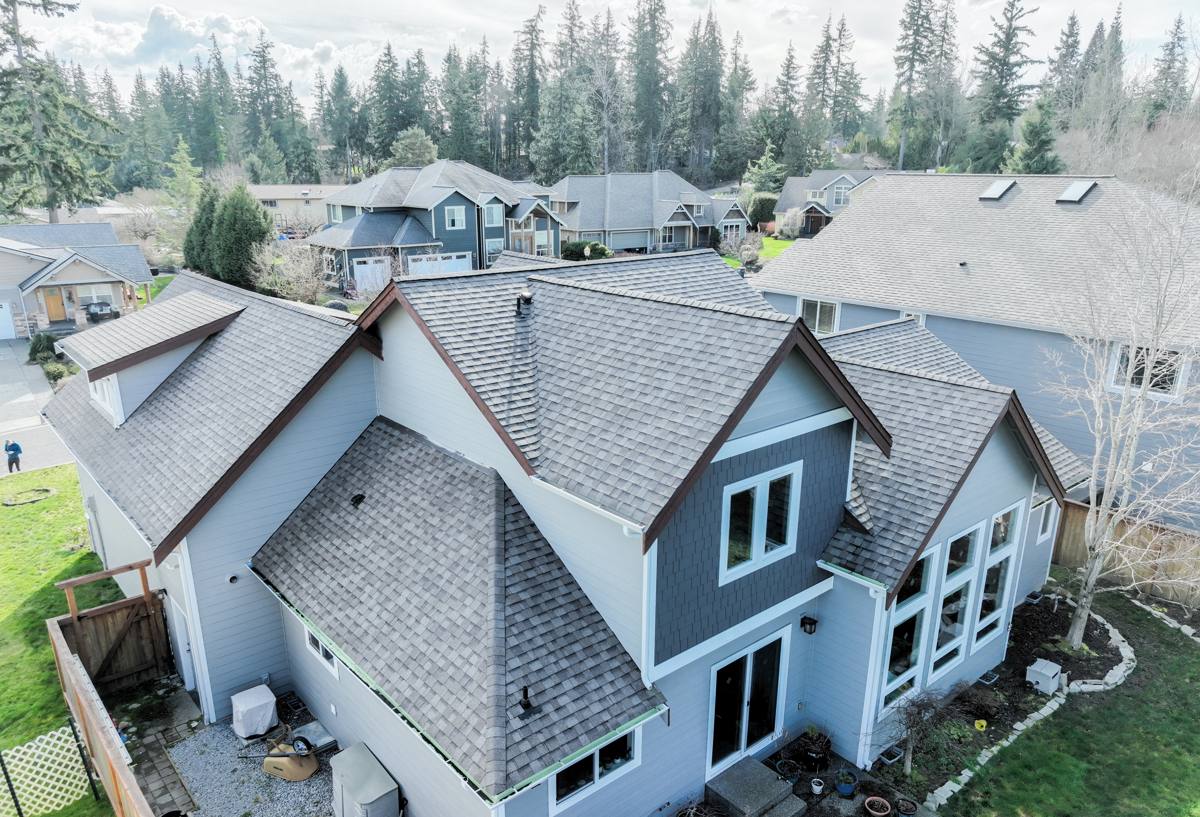
What Sarasota's Climate Puts Board & Batten Through
Every siding product installed in Sarasota County has to survive the same handful of stresses, year after year. Board and batten, because of its vertical seams and reveal design, is more exposed to some of these than a standard lap profile.
Hurricane-Force Wind
Wind doesn't just push on siding — it gets underneath it. Board and batten relies on the seams between boards and battens staying tight and properly fastened. If wind finds a purchase point at a loose edge or an under-fastened panel, it can peel siding off in a single storm. The fastening schedule and panel attachment matter as much as the material itself.
Year-Round UV
Sarasota doesn't get much of a break from sun exposure, even in winter. UV breaks down pigment and resin in lower-grade coatings, which is why field-painted or job-site-primed board and batten tends to chalk, fade unevenly, and need repainting far sooner here than in a milder climate.
Wind-Driven Rain
Board and batten has more vertical seams per square foot than horizontal lap siding, and every seam is a potential water entry point when rain is being driven sideways by storm winds. If there's no drainage plane behind the siding, water that gets past a seam has nowhere to go but into the wall assembly.
Salt Air
Southside Village sits close enough to Sarasota Bay that salt-laden air is a real factor, especially for fasteners, flashing, and metal trim. Salt exposure accelerates corrosion in anything not rated for it, which shows up first as rust streaking and eventually as failed fasteners.
Where Board & Batten Installations Go Wrong
Board and batten has a reputation problem in coastal climates, and it's usually earned by the installation, not the material. The most common failures we see, including on homes we didn't originally build for:
- Battens face-nailed directly over boards with no drainage gap, trapping any moisture that gets behind the assembly against the substrate
- Vertical seams sealed with caulk alone instead of proper flashing and lap detailing, so the whole system depends on a bead of sealant that will eventually fail
- Fastener spacing chosen for a calmer climate, leaving panels under-attached for local wind speeds
- Moisture-sensitive substrate materials used in an application that guarantees repeated wetting
- Standard fasteners used instead of corrosion-resistant hardware, shortening the life of the attachment long before the siding itself wears out
None of these mistakes are visible on installation day. They show up two, five, or ten years later — as soft spots, staining, or siding that comes loose in a storm.
What a Correct Board & Batten Installation Involves
A board and batten job built for this climate looks unglamorous in the middle of the process, because most of the work that matters is hidden once the siding goes up.
Drainage Plane First
A weather-resistive barrier goes on the wall sheathing before any siding, and furring strips or a rainscreen gap hold the siding slightly off that barrier. That gap gives any water that does get behind a board somewhere to drain and dry out, instead of sitting against the wall.
Flashing at Every Transition
Windows, doors, roof lines, and horizontal trim all need proper flashing detail, not just caulk. Flashing sheds water down and out; caulk only works until it doesn't.
A Fastening Schedule Built for Wind, Not Just Gravity
Fastener type, length, and spacing are chosen to meet wind load requirements for our area, not a generic minimum. That's the difference between siding that stays attached through a tropical storm and siding that peels.
A Factory Finish, Not a Field Finish
Job-site painting is where UV problems start. A factory-applied finish is baked on and tested for sun exposure in a way a field coat of paint over primed board simply isn't.
Why We Install This Only in James Hardie Fiber Cement
Board and batten is available in vinyl, in real wood, in engineered wood, and in fiber cement. We install James Hardie fiber cement for this application and don't install the others, because the trade-offs on the alternatives don't hold up well in a Sarasota climate.
| Factor | James Hardie Fiber Cement | Vinyl Board & Batten | Real Wood Board & Batten |
|---|---|---|---|
| Combustibility | Non-combustible | Combustible; can soften or warp near heat | Combustible |
| Moisture behavior | Engineered to resist moisture damage when installed to spec | Doesn't rot, but can warp or distort in sustained heat | Absorbs moisture; prone to rot without constant upkeep |
| UV/finish durability | Factory ColorPlus finish, resists fading | Can fade and grow brittle after years of constant sun | Field paint or stain needs reapplication every few years |
| Wind performance | Rated for high-wind installation when specified correctly | Lighter panels can be more vulnerable to wind uplift | Performance depends heavily on fastening and wood quality |
| Warranty | Strong transferable manufacturer warranty | Varies by manufacturer, often prorated | Typically no manufacturer warranty on the material itself |
This isn't a claim that vinyl or wood board and batten is unusable everywhere — plenty of homes have it. It's that after years of exterior work on this coast, we standardized on the product that holds up best under our specific combination of wind, sun, and salt, and we'd rather turn down an installation than put up something we don't believe will perform here.
Our Process for a Southside Village Board & Batten Project
- On-site assessment — we look at the existing siding, substrate condition, and trim details, and check for moisture damage before quoting anything
- Substrate check and repair — any soft or damaged sheathing gets addressed before new siding goes up, not covered over
- Tear-off and moisture barrier installation — old siding comes off, and a new weather-resistive barrier goes on correctly lapped and sealed
- Rainscreen and panel installation — furring strips, then Hardie panel and batten installed to the fastening schedule for our wind zone
- Flashing and trim detail — windows, doors, and transitions get proper flashing, not caulk-only shortcuts
- Final inspection and walkthrough — we review the finished job with the homeowner before calling it done
Cost Factors for Board & Batten in This Area
Every home is different, so we won't put a number on your project without seeing it — but these are the factors that move the price up or down on board and batten work in Southside Village:
| Factor | Why It Affects Cost |
|---|---|
| Home size and linear footage | More wall area and more vertical seams means more material and labor |
| Existing siding removal and substrate repair | Older homes in this area sometimes need sheathing or framing repair once old siding comes off |
| Trim and architectural detail | Bungalow and cottage-style trim adds labor time compared to a plain elevation |
| Site access | Mature trees, narrow lots, and tight side yards can slow staging and material handling |
| Color and finish selection | Factory finish options vary in cost, but all outperform job-site paint over time |
Living With Board & Batten Siding
Correctly installed James Hardie board and batten is low-maintenance, not no-maintenance. A little attention keeps it performing for the long run:
- Rinse salt residue and general grime off the surface periodically, especially on elevations facing open water or busy streets
- Check caulking and sealant at seams, window and door transitions, and penetrations once a year
- Look it over after any major storm for loose panels, dented battens, or displaced trim
- Keep vegetation trimmed back from the siding so leaves and moisture aren't sitting against it
- Watch ground-level splashback areas near sprinklers or low grading, where sustained wetting is most likely
Why a Crew That Already Works Southside Village Matters
A lot of what makes a board and batten installation succeed or fail here isn't on the product spec sheet — it's local knowledge. Knowing the typical age and substrate condition of homes in this part of Sarasota. Knowing how City of Sarasota permitting and inspection works for exterior replacement. Knowing how to stage a job around mature trees and narrow side yards without turning a simple project into a week of headaches. A crew that has already worked this neighborhood isn't guessing at any of that — they've solved it on the last house down the street.
If you're weighing board and batten siding for a home in Southside Village, we're happy to take a look and give you a straightforward, no-pressure estimate — an honest read on what your home needs and what it would take to do it right.