 Sarasota Siding
 Siding Replacement in The Meadows: A Different Kind of Sarasota Lot
The Meadows is one of the more distinct pockets of Sarasota to own a home in, and that shows up in how siding ages here. Unlike open, sun-blasted lots closer to the coast, many homes in The Meadows sit under a mature tree canopy along winding, wooded streets that have filled in over the decades since the community was developed. That canopy is a genuine asset for shade and curb appeal, but it changes the maintenance math on exterior siding in ways a lot of homeowners don't find out about until they're already dealing with soft boards, streaking, or a wall that never quite dries out after a storm.
This page is about one job, done right, in this one neighborhood: replacing old, failing siding on a Meadows home with a product and installation approach built for what actually happens here — shade-driven moisture, Sarasota County humidity, salt-laden Gulf air moving inland, and the wind loads that come with every hurricane season.
Why Tree Cover Changes the Siding Equation
Most siding guidance is written for homes that get full sun and dry out quickly after rain. That's not the typical Meadows lot. When a wall sits in shade for most of the day, a few things happen that don't happen on an open lot:
- Wet siding stays wet longer, which gives mold, mildew, and algae more time to take hold before the surface ever dries.
- Leaf litter, pollen, and organic debris collect against trim, corners, and butt joints, holding moisture directly against the material.
- Falling limbs and debris during summer storms and hurricane season put more point-impact stress on siding than an open lot typically sees.
- Reduced airflow under a dense canopy slows evaporation even on days without rain, especially during Sarasota's humid summer stretch.
None of that is a reason to avoid siding replacement — it's a reason to be deliberate about the material and the installation details that determine whether a wall handles years of shaded moisture or slowly breaks down under it.
Add Hurricane Wind and Coastal Air to the Mix
Shade solves one problem and creates another, but the broader Sarasota climate doesn't take a break for it. Hurricane-force wind events test every fastener, joint, and seam in a siding system. Wind-driven rain gets forced sideways and upward into laps and trim that were never designed to handle standing water. And even set back from the immediate coastline, salt-laden air off the Gulf still reaches inland neighborhoods like The Meadows, accelerating corrosion on fasteners and hardware and breaking down finishes that weren't engineered for it. A Meadows home has to handle shade-driven moisture and coastal storm exposure at the same time — that combination is exactly why generic siding advice falls short here.
What a Correct Siding Replacement Actually Involves
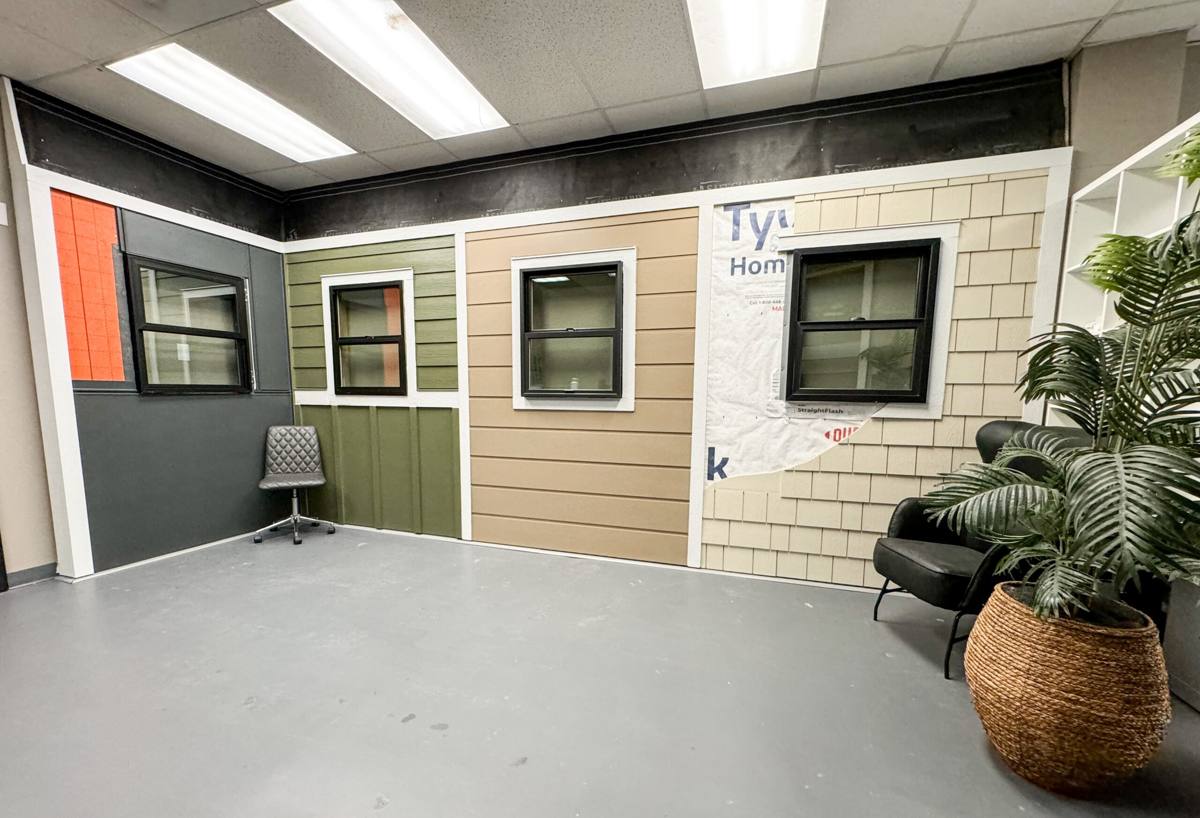
Siding replacement isn't just pulling off old boards and nailing up new ones. Done correctly, it's a system, and every layer matters:
Tear-Off and Substrate Inspection
Once the old siding is off, the sheathing underneath gets inspected for rot, soft spots, and prior water damage — common on shaded walls where leaks go unnoticed longer because the surface never fully dries between rain events. Any damaged sheathing gets replaced before anything new goes up. Skipping this step is the single most common shortcut that leads to premature failure.
Weather-Resistive Barrier
A properly lapped and sealed house wrap goes over the sheathing to manage bulk water and vapor drive. On a shaded, humid lot, this layer is doing more work over the life of the wall than it would on a dry, sun-exposed one.
Flashing at Every Penetration
Windows, doors, hose bibs, light fixtures, and any other wall penetration need correctly integrated flashing — installed so water sheds outward and down, never into the wall cavity. This is where a lot of lower-quality installs fail first, and it's often invisible until a wall starts showing damage from the inside out.
Fastening and Clearances
Fastener type, spacing, and embedment have to match both the manufacturer's specification and Florida's wind-load requirements. Bottom starter courses and any siding near grade, patios, or landscaping beds need proper clearance so water doesn't wick up into the material — a detail that matters even more on tree-shaded lots where the ground stays damp longer.
Comparing Siding Materials for a Shaded, Humid Sarasota Lot
Every siding material handles Sarasota's climate differently, and the shade in The Meadows widens the gap between them. Here's an honest comparison based on how these materials actually behave under prolonged moisture, humidity, and coastal wind exposure:
| Material | Behavior Under Shade & Humidity | Wind/Storm Performance | Long-Term Maintenance |
|---|---|---|---|
| James Hardie Fiber Cement | Non-combustible, dimensionally stable; resists moisture-driven warping and swelling | Engineered HZ product lines rated for high-wind regions; strong fastening performance | Factory ColorPlus finish resists fading and holds up without repeated repainting |
| Vinyl Siding | Can warp or distort with heat cycling; seams can trap moisture in shaded, low-airflow areas | Can crack, buckle, or blow off in sustained high wind | Low upkeep but limited lifespan in intense sun/heat cycling and impact events |
| LP SmartSide (engineered wood) | Wood-based core is more moisture-sensitive; shaded, slow-drying walls raise long-term risk | Performs reasonably when installed to spec, but edge/seam sealing is critical | Requires diligent caulking and repainting maintenance to protect the wood substrate |
| Primed Spruce / Cedar | Natural wood is most vulnerable to sustained shade moisture — rot risk climbs significantly | Performance depends heavily on installation quality and ongoing upkeep | Highest maintenance burden: regular repainting, caulking, and rot inspection |
We install James Hardie fiber cement exclusively, and this table is part of why. It's not that the other products are worthless — vinyl and engineered wood both have a place in this industry. It's that under sustained shade, Gulf Coast humidity, and hurricane-season wind, fiber cement gives Meadows homeowners the best balance of durability, low maintenance, and finish longevity, without the moisture sensitivity that wood-based products carry or the impact and heat-cycling limits vinyl carries.
Why We Standardized on James Hardie
James Hardie fiber cement is non-combustible, engineered specifically for high-humidity, high-wind climates through its HZ product lines, and finished at the factory with ColorPlus technology — a baked-on finish that resists fading and chipping far better than field-applied paint. It carries a strong transferable warranty, which matters to homeowners who may sell in the years ahead. None of that is marketing shorthand; it's the specific set of properties that hold up under what a Meadows lot actually experiences — shaded moisture retention nine months of the year and hurricane-force wind and rain the rest.
That said, fiber cement only performs as well as its installation. A correctly installed Hardie wall and a poorly installed one can look identical on day one and behave completely differently five years later, which is why the installation details above matter as much as the product choice itself.
Our Process for The Meadows
Working in this neighborhood repeatedly has taught our crew what to check for before a single board comes off the house:
- Site walk and assessment — we look at tree proximity, shade patterns, drainage around the foundation, and any existing moisture damage before scoping the job.
- Written estimate — a clear breakdown of material, labor, and any substrate repair anticipated, with no vague allowances.
- Tear-off and substrate repair — old siding removed, sheathing inspected, and any damaged wood replaced before moving forward.
- House wrap, flashing, and Hardie installation — installed to manufacturer spec and Florida wind-load code, with attention to the clearances and fastening details that matter most on a shaded lot.
- Final walkthrough — we go over the finished work with the homeowner and address anything before calling the job complete.
We also plan around tree cover and yard access on a case-by-case basis, since staging and debris management look different on a wooded Meadows lot than on an open one.
Choosing a Crew That Already Works in The Meadows
Neighborhood familiarity isn't a sales point — it's a practical advantage. A crew that's already worked shaded, tree-lined Sarasota lots knows to check for hidden moisture damage before it's visible from the street, plans around limb and debris cleanup, and understands how HOA expectations around exterior appearance typically work in an established community like this one. When you're vetting a siding contractor for a home here, it's worth asking:
- Are they licensed and insured to do exterior work in Sarasota County?
- Do they have direct experience with shaded, humid lots — not just general Florida siding work?
- Will they inspect and document sheathing condition before installing new siding, not just cover it up?
- What fastening and flashing standards do they follow, and are those standards written into the estimate?
- What warranty applies to both the material and the labor, and is it transferable if you sell the home?
- Can they explain, in plain terms, why they recommend the product they're proposing for your specific lot?
A contractor who can answer all of those clearly, without dodging the harder questions, is one worth trusting with a job that's going to be on your home for decades.
Signs It's Time to Replace, Not Patch
Not every siding issue in The Meadows means a full replacement, but certain signs point that direction: soft or spongy spots when pressed, siding that stays visibly damp or discolored long after rain has stopped, persistent mildew or algae growth that returns quickly after cleaning, warping or separation at seams and corners, or visible impact damage from fallen limbs. Isolated damage can sometimes be repaired, but widespread moisture issues under an aging siding system are usually a sign the underlying weather barrier has failed — and at that point, patching just delays a bigger problem.
If your home in The Meadows is showing any of these signs, or you're simply due for a siding update, we're glad to come take a look. Reach out for a free, no-pressure estimate using the form below, and we'll walk the property with you and give you a straight answer on what your home actually needs.